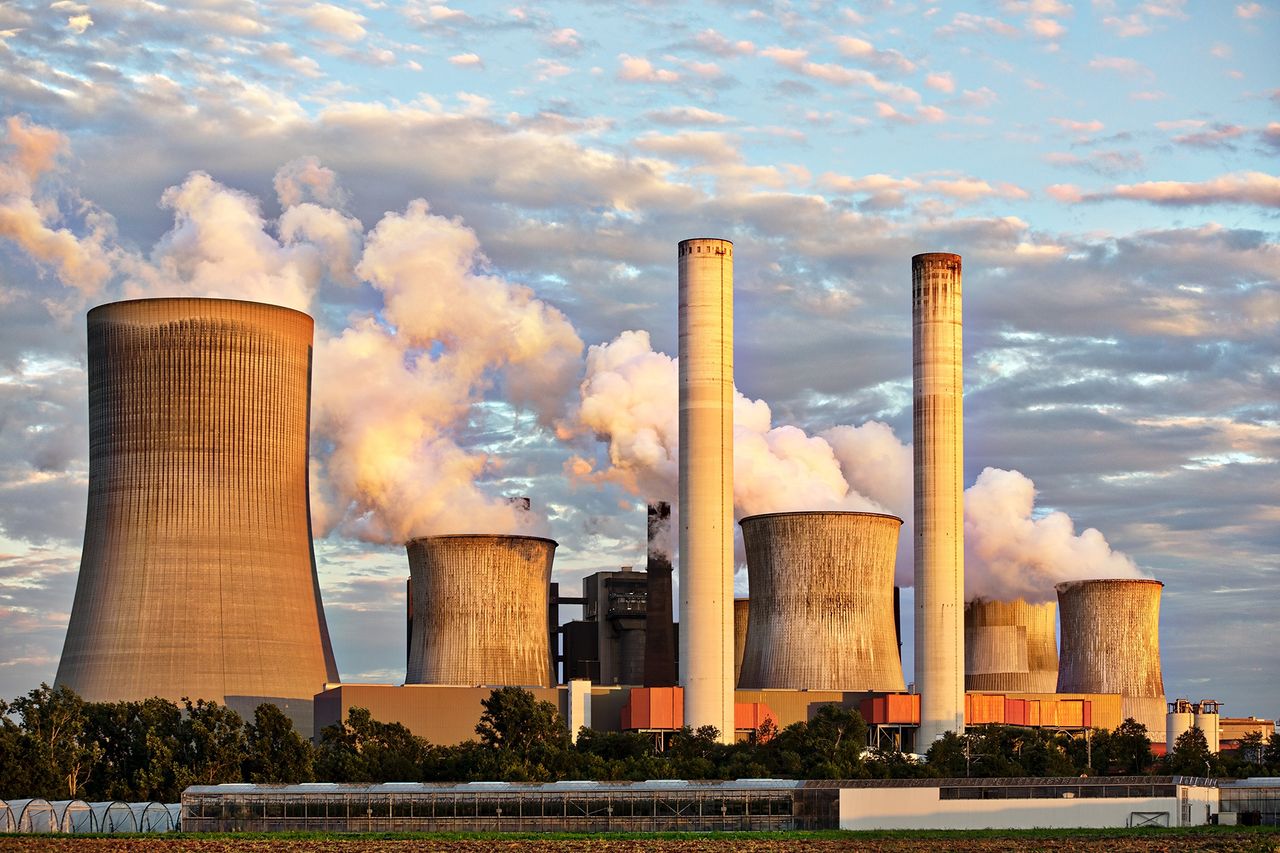
View of a power plant with smoke emissions under a cloudy sky, depicting industrial energy production. The inherited system
A power transmission tower silhouette against a warm sunset sky, symbolizing energy and infrastructure. A responsible next chapter

Energy security • safety • transparency

Reviving Nuclear Power in the Philippines: A Conditional and Responsible Approach.

Problem Definition: The Philippines faces an urgent energy crisis driven by a heavy reliance on imported coal and oil, which supplied 57.2 percent of the country's electricity in 2025. This creates high operating costs for businesses and heavy living costs for households, with the country recording an average rate of $0.21 per kilowatt-hour—far higher than neighboring Indonesia and Thailand.

Root Cause Analysis: The core issue extends beyond economics into political and social spheres. Historically, the Bataan Nuclear Power Plant left a legacy of debt and political distrust, while the 1986 Chernobyl and 2011 Fukushima disasters entrenched deep public fears regarding radioactive waste and seismic risks along the Pacific Ring of Fire.

57.2% Electricity supplied by imported coal and oil in 2025
$0.21/kWh Average electricity rate
Pacific Ring of Fire Seismic risk context

The national conversation

Actors and Perspectives

To formulate a sustainable path forward, we must synthesize competing national perspectives.

The Proponents (DOE, DOST, Technical Experts)

Advocate for a highly controlled transition to nuclear power to meet growing demands, provide stable 1,200-megawatt baseload electricity, and achieve national energy security. They emphasize following the IAEA's strict global safety standards and the newly formed PhilATOM regulatory authority.

The Critics (Greenpeace & Local Communities)

Highlight legitimate, critical concerns regarding disaster risks, long-term radioactive waste disposal, and enormous capital costs, arguing that renewable energy should be the sole focus.

Our Synthesized Stance

We agree with reviving nuclear energy for stable, cheaper, and cleaner power, but strictly conditional on independent IAEA audits, absolute financial transparency, and integration into a diversified mix alongside geothermal, solar, and wind.

An international lens

Media and Global Presentation

A TV studio setup featuring cameras and a green screen for production purposes. The new media narrative
01 / The New Media Narrative

Shaping Public Opinion: The Modern Nuclear Narrative

Philippine mainstream media now present nuclear power as part of a strategic resurgence, portraying it as a modern, tightly controlled, clean, and reliable source of electricity. Importantly, the media emphasizes that nuclear power is intended to be used in conjunction with renewable energy sources, not to replace them.

02 / Balanced Reporting

Balanced Reporting

Government Progress

The media actively tracks the rapid progression of government policy, highlighting the signing of the Philippine National Nuclear Energy Safety Act (Republic Act No. 12305), the establishment of PhilATOM, and the push for competitive procurement frameworks and foreign technical partnerships, such as the Canadian firm Atkins Réalis.

Activist Concerns

Ensuring balanced reporting, media outlets also give dedicated space to anti-nuclear activists, highlighting their concerns about nuclear energy being a false solution to the country's energy crisis.

03 / Alignment with Global Standards

Joining an International Consensus

Media portrayals align the Philippine Government's actions with international regulatory bodies, emphasizing the IAEA's Milestones Approach—a comprehensive framework covering 19 critical infrastructure and safety issues—as the recognized standard before any plant is built.

International Models

  • France: Presented as the established model, generating roughly 70 percent of its electricity from nuclear power through decades of standardized operation.
  • Japan: Cited as a nation that successfully returned to nuclear energy after the 2011 Fukushima disaster by implementing strict safety reassessments.
  • United Arab Emirates: Highlighted as the clearest success story for newcomer countries, starting with zero nuclear experience in 2009 and now safely operating the four-reactor Barakah plant.
  • COP28 Commitment: Framing nuclear power as a necessary part of the clean energy transition by referencing the pledge of over 20 countries to triple their nuclear capacity by 2050.
Strategic roadmap

Developing the Solution

After evaluating national guidelines, Public-Private Partnerships (PPPs), and Small Modular Reactors (SMRs), we propose an innovative, sequential 3-Stage Readiness Framework:

Stage 1: Prepare (Safety First)

Strengthen institutional oversight through PhilATOM, train a domestic nuclear workforce, and execute comprehensive geological evaluations before any construction begins.

Stage 2: Protect & Finance (Responsible Funding)

Utilize mature PPP frameworks to leverage private capital and foreign expertise, mitigating public debt. This must be governed by independent scientific bodies and international auditors to ensure safety is never compromised for profit.

Stage 3: Expand Responsibly (Strategic Integration)

Deploy large-scale reactors for national grid baseloads, and strategically introduce off-grid Small Modular Reactors (30 MW to 300 MW) to isolated island provinces currently suffering from expensive diesel reliance.

From framework to accountability

Assessing the Solution & SMART Execution

To measure the efficacy of our 3-Stage Framework, we evaluate it against four critical success indicators, starting with a structured implementation plan.

SMART Our plan
Specific Implement the 3-Stage Readiness Framework for safe nuclear power revival, led by PhilATOM, the DOE, and independent oversight committees.
Measurable Track completion of the IAEA 19-Milestone Approach, ensure 100% of PPPs pass independent safety audits, and measure the percentage reduction in the current $0.21/kWh consumer electricity cost.
Attainable Builds on the newly established Republic Act No. 12305 and existing Build-Operate-Transfer (BOT) laws. Tap international developers and the IAEA for technical partnerships and training.
Relevant Every activity supports the goal: safely integrating reliable and cheaper nuclear baseload power into a diversified national energy mix.
Time-based Monitor progress against a defined implementation schedule aligned with global standard milestones, conducting step-by-step reviews before any facility construction begins.

Targets are proposed by our group and will be confirmed against the actual baseline and budget.

Evaluating Overall Success Indicators

Feasibility & Execution

A well-designed framework cannot succeed if it is poorly implemented. We will evaluate whether the solution is executed as planned by ensuring all necessary resources, activities, and government-private stakeholders are fully in place. To guarantee the solution is affordable and efficient, we will continuously compare the actual expenses, time, and resources utilized by the Public-Private Partnerships against the available national budget constraints.

Return of Investment (ROI)

We will quantify success by measuring the percentage of profit and cost-savings generated in relation to the capital spent by PPPs within a reasonable timeframe after deployment, comparing actual expenses to the national energy budget.

User Satisfaction

Success requires long-term public adaptation. We will utilize continuous community surveys and public consultations in affected provinces to gather feedback, ensuring that if opportunities for improvement arise, the solution can be refined.

Sustainability & Comparative Performance

We will establish a step-by-step review routine to ensure long-term quality. We will compare our solution's carbon emission metrics and cost stability against previous coal-dependent grids to ensure the nuclear framework performs better than past systems.

Source register

References & Citations

Source labels and links provided in the reference file.

  1. Egalin, K. A. (2025, September 25). PBBM signs law for nuclear regulatory authority. DOST.Read Source
  2. Department of Energy (n.d.). PH advances nuclear energy preparations as DOE lays out key milestones.Read Source
  3. Philippine Nuclear Research Institute (2015, May 6). About us. Department of Science and Technology.Read Source
  4. Executive Order No. 116: Directing a study for the adoption of a national position on a nuclear energy program. (2020, July 24).Read Source
  5. Resolution directing the appropriate Senate committee to conduct an inquiry on the Nuclear Energy Program Inter-Agency Committee. (2023).Read Source
  6. United States signs civil nuclear cooperation agreement with the Philippines. (2023, November 16).Read Source
  7. U.S.-Philippines civil nuclear cooperation agreement enters into force. (2024, July 8).Read Source
  8. International Atomic Energy Agency (2024, December 6). IAEA reviews progress of the Philippines' nuclear infrastructure development.Read Source
  9. International Atomic Energy Agency (2018, December 17). IAEA reviews the Philippines' nuclear power infrastructure development.Read Source
  10. International Atomic Energy Agency (2015). Milestones in the development of a national infrastructure for nuclear power.Read Source
  11. International Atomic Energy Agency (2026, January 27). Five reasons the clean energy transition needs nuclear power.Read Source
  12. International Atomic Energy Agency (2023, December 13). Nuclear energy makes history as final COP28 agreement calls for faster deployment.Read Source
  13. World Nuclear Association (n.d.). The Nuclear Debate.Read Source
  14. World Economic Forum (2025, August 6). Where the world nuclear revival is happening.Read Source
  15. World Bank (n.d.). Philippines. World Bank Open Data.Read Source
  16. Bautista, U. A. (2025). Technical review and status of small modular reactor technologies: Prospects of nuclear infrastructure development in the Philippines. Energies, 18(7), Article 1862.Read Source
  17. Kovachev, M. (2019, June 10–12). Milestones Approach and its application to SMRs [Presentation slide deck]. Technical Working Group on Small and Medium Sized Reactors (TWG-SMR), International Atomic Energy Agency.Read Source
  18. Navarro, A. M. (2022). The implications of developing a Philippine nuclear energy program (Discussion Paper Series No. 2022-61). Philippine Institute for Development Studies.Read Source
  19. Nuclear Business Platform. (2025, November 13). Philippines nuclear: New laws and pioneer incentives drive multi-billion dollar clean energy transition.Read Source
  20. Republic Act No. 12305: An act providing for a comprehensive legal framework for nuclear safety, security, and safeguards in the peaceful utilization of nuclear energy in the Philippines. (2025). Supreme Court E-Library.Read Source
  21. Bonzo, L. T. (2026, July 31). EXPLAINER: Why is the Philippines turning to nuclear energy? GMA News Online.Read Source
  22. Cordero, T. (2026a, August 13). DOE identifies, assesses potential nuclear plant sites in 5 provinces. GMA News Online.Read Source
  23. Cordero, T. (2026b, September 29). DOE pushes competitive framework for nuclear power procurement. GMA News Online.Read Source
  24. Ferreras, V. A. (2026, July 5). DTI eyes partnership with Canadian firm AtkinsRealis on civil nuclear energy. GMA News Online.Read Source
  25. Asian Power (2026, July 9). The Philippines pays more power than most Southeast Asian peers.Read Source
  26. GMA Network (2026, July). World Bank flags PH's highest electricity rates in ASEAN.Read Source
  27. Philippine Star (2026, July 21). DOE: Philippines power rates now highest in SEA.Read Source
  28. Lalu, G. P. (2025, November 26). PH is ready for responsible nuclear energy use - Dy. Inquirer.net.Read Source
  29. Inquirer.net (2025, October 2). Marcos signs law creating PhilAtom, new nuclear regulatory agency.Read Source
  30. Inquirer.net (2021, June 15). Gov't wins over P1B in damages against Marcos crony over Bataan.Read Source
  31. Greenpeace to Marcos: Choose renewable energy over ‘false solutions.’ (2026, July 28). newsinfo.inquirer.net.Read Source